

Mitral Valve Stenosis : A heart condition you must not ignore: stay alert, recognize the signs, and take timely action.

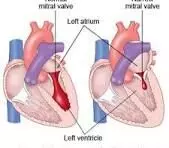
Our heart is made up of four chambers — two upper chambers (atria) and two lower chambers (ventricles). The valves present between these chambers play a very important role — they ensure that blood flows in only one direction and reaches every part of the heart smoothly.
But when any of these valves becomes stiff or narrow, the heart has difficulty in pumping blood. This condition is known as Mitral Stenosis.
Why does Mitral Stenosis occur?
In mitral stenosis, the mitral valve — which lies between the left atrium and the left ventricle — gradually becomes narrow or stiff. Because of this, the flow of blood from the upper chamber (atrium) to the lower chamber (ventricle) occurs with obstruction. The result is an increase in pressure in the lungs, and over time symptoms such as shortness of breath, fatigue, rapid heartbeats, and weakening of the heart begin to appear.
This disease does not progress suddenly — instead, it develops slowly over the course of years. Often, patients do not feel any major discomfort in the early stages, especially if they are not very physically active. But as the narrowing of the valve increases, the symptoms become more noticeable and the need for treatment increases.
What causes Mitral Stenosis?
Mitral valve stenosis can develop due to several different reasons — some are common, while others are rare. These factors gradually affect the structure of the valve, making it stiff or narrow and leading to obstruction in blood flow.
1. Rheumatic Fever: This is a complication of strep throat (a bacterial infection of the throat). After the infection, the body's immune response mistakenly attacks the heart valves, leading to swelling, thickening, and gradual permanent narrowing of the valve. This is the most common cause in India and many other developing countries.
2. Age-related Changes (Degenerative/Calcific Changes) : With increasing age, calcium can accumulate around the valve (calcification), making it stiff and narrow. This condition is more common in people with kidney disease, diabetes, or high blood pressure.
3. Congenital Defect : Some individuals are born with a naturally narrow mitral valve. This condition may show symptoms early in childhood or young adulthood.
4. Other Rare Causes:
- Radiation therapy (during chest cancer treatment)
- Certain chronic medications (such as older anti-migraine drugs or slimming agents)
- Autoimmune diseases like lupus or rheumatoid arthritis
What are the symptoms of the disease?
In the beginning, the symptoms of this disease are often very mild or may not be noticeable at all. However, over time they start to become more prominent.
Main symptoms:
- Shortness of breath – initially only during physical exertion, and gradually even at rest.
- Fatigue or weakness – because the heart is unable to pump enough blood to the body.
- Cough or wheezing – a whistling sound while breathing.
- Fast or irregular heartbeat (Palpitations) – often due to atrial fibrillation.
- Chest pain or pressure, which may sometimes radiate to the arm, neck, or jaw.
- Hoarseness of voice – due to pressure on a nerve from an enlarged left atrium (known as Ortner syndrome).
- Blue or pink patches on the face (Mitral facies) – caused by long-term low oxygen levels.
- Swelling in the ankles, feet, or abdomen – when the heart’s pumping ability decreases.
- Frequent coughing up of blood (Hemoptysis) – due to increased pressure in the lungs.
Remember: Early symptoms are often ignored. If you experience mild shortness of breath, fatigue, or fast heartbeats, make sure to get checked by a doctor.
How is the disease diagnosed?
Timely and accurate diagnosis of mitral valve stenosis is extremely important so that the treatment can be planned in the right direction. For this, doctors perform several types of tests —
1. Physical Examination:
The doctor listens to the heart sounds using a stethoscope. In this condition, a special low-pitched rumbling sound (diastolic murmur) is often heard.
2. Echocardiogram:
This is the most important and reliable test. It uses ultrasound to assess the size of the heart valve, its movement, the mitral valve area, and the speed of blood flow. It helps determine the severity of the disease (mild, moderate, or severe).
3. ECG (Electrocardiogram):
This test shows whether the heart rhythm is normal or not and whether the left atrium or right ventricle is under increased pressure.
4. Chest X-ray:
It helps detect whether the heart is enlarged or if there is fluid congestion in the lungs.
5. Stress Test (TMT):
When there is a mismatch between symptoms and the echo report, this test evaluates how the heart works during physical exertion.
6. Cardiac Catheterization:
A thin tube (catheter) is guided through blood vessels into the heart to measure pressure and blood flow across the valve. Sometimes contrast dye is used to take X-ray images so the structure of the valve can be seen more clearly.
What is the treatment for Mitral Stenosis?
The treatment depends on the severity of the disease, the symptoms, and the overall health of the patient.
1. Medical Management :
Medicines cannot completely cure the disease, but they help reduce symptoms and prevent complications.
- Medications to control heart rate – such as beta-blockers (metoprolol, bisoprolol) or calcium channel blockers.
- Blood thinners (Anticoagulants) – especially in cases with Atrial Fibrillation, to prevent blood clots and reduce the risk of stroke.
- Diuretics (water pills) – to reduce fluid buildup in the lungs.
- Antibiotic prophylaxis – Penicillin injections every 3–4 weeks to prevent recurrence of rheumatic fever.
2. Interventional or Surgical Treatment
(a) Balloon Valvotomy (Percutaneous Balloon Valvuloplasty):
This is a non-surgical, catheter-based procedure.
- A thin catheter with a balloon at its tip is guided into the heart.
- The balloon is inflated inside the valve to widen the narrowed opening.
- This procedure is done when the valve is not excessively calcified or damaged.
(b) Open Heart Surgery (Valve Repair or Replacement) :
This is recommended when balloon valvotomy is not suitable or does not work.
- The surgeon repairs the valve or replaces it with a mechanical or biological (tissue) valve.
- If a mechanical valve is used, the patient must take lifelong blood-thinning medication (such as warfarin).
How should a patient take daily care?
For a person suffering from mitral valve stenosis, taking medicines alone is not enough — a balanced lifestyle, healthy habits, and regular care are equally important. By taking medicines on time, eating a nutritious diet, doing light exercise, and following certain precautions, the progression of the disease can be slowed down and the quality of life can be improved.
1. Medication Routine
- Always take your medicines on time and exactly as prescribed by your doctor. Do not change the dose or medicine on your own.
- Before taking any medicine that contains aspirin or pain-relieving ingredients (such as ibuprofen), consult your doctor — these can increase the risk of bleeding.
- Avoid activities that may cause falls or injuries; use support or safety measures if needed.
- Wear a medical alert card or bracelet that mentions your medications and heart condition — it can be lifesaving in emergencies.
2. Diet & Lifestyle
- Reduce salt intake – too much salt causes water retention, which increases stress on the heart.
- Limit caffeine and alcohol – they may trigger fast or irregular heartbeats.
- Avoid smoking or tobacco completely – these harden blood vessels and reduce oxygen levels.
- Exercise regularly, but only at the level recommended by your doctor. Avoid overexertion.
- Maintain a healthy weight – being overweight puts additional strain on the heart.
- Eat a heart-healthy diet – include fresh fruits, green vegetables, whole grains, low-fat dairy, and foods rich in omega-3.
3. Special Precautions : Patients with mitral valve stenosis need extra attention and care in certain situations to avoid infections or sudden complications.
- Before any dental treatment (such as tooth extraction or gum cleaning), inform both your doctor and dentist that you have mitral valve disease.
- Some patients may require antibiotic prophylaxis before such dental procedures to reduce the risk of infection.
- If you are planning a pregnancy, consult your doctor beforehand — valve-related heart diseases can worsen during pregnancy.
When should you contact a doctor immediately?
Some symptoms of mitral valve stenosis may seem mild, but certain signs can be warning signals of a serious problem. It is important to know when you should simply observe symptoms and when you need urgent medical attention.
In routine (non-emergency) situations:
Mild cough, increasing fatigue, or shortness of breath after physical activity.
In emergency situations:
- Severe chest pain or pressure
- Extreme difficulty in breathing or a feeling of suffocation
- Sudden fast or irregular heartbeat
- Sudden swelling or rapid weight gain
- Fainting, confusion, or excessive drowsiness
Do not delay if you notice any of these symptoms — go to the hospital immediately or call emergency services at 108 / 112 for help.
Every heartbeat is precious!
Successful treatment of mitral valve stenosis does not depend only on medicines or surgery, but also on awareness, regular check-ups, and timely intervention. If you experience shortness of breath, fatigue, or irregular heartbeats, do not dismiss them as age or stress.
If the disease is detected early and proper care is taken, a patient can live a long, active, and healthy life.
Baumgartner H et al: Echocardiographic assessment of valve stenosis: EAE/ASE recommendations for clinical practice. J Am Soc Echocardiogr. 22(1):1-23; quiz 101-2, 2009.
Soliman OI et al: New scores for the assessment of mitral stenosis using real-time three-dimensional echocardiography. Curr Cardiovasc Imaging Rep. 4(5):370-7, 2011
Writing Committee Members et al: 2020 ACC/AHA guideline for the management of patients with valvular heart disease: a report of the American College of Cardiology/American Heart Association Joint Committee on Clinical Practice Guidelines. J Thorac Cardiovasc Surg. ePub, 2021
Wilson WR et al: Prevention of viridans group streptococcal infective endocarditis: a scientific statement from the American Heart Association. Circulation. 143(20):e963-78, 2021