

Are Running Shoes Making Knees Worse? Surgeons Explain the Biomechanics Nobody Talks About - Dr Ajay Kumar Paruchuri
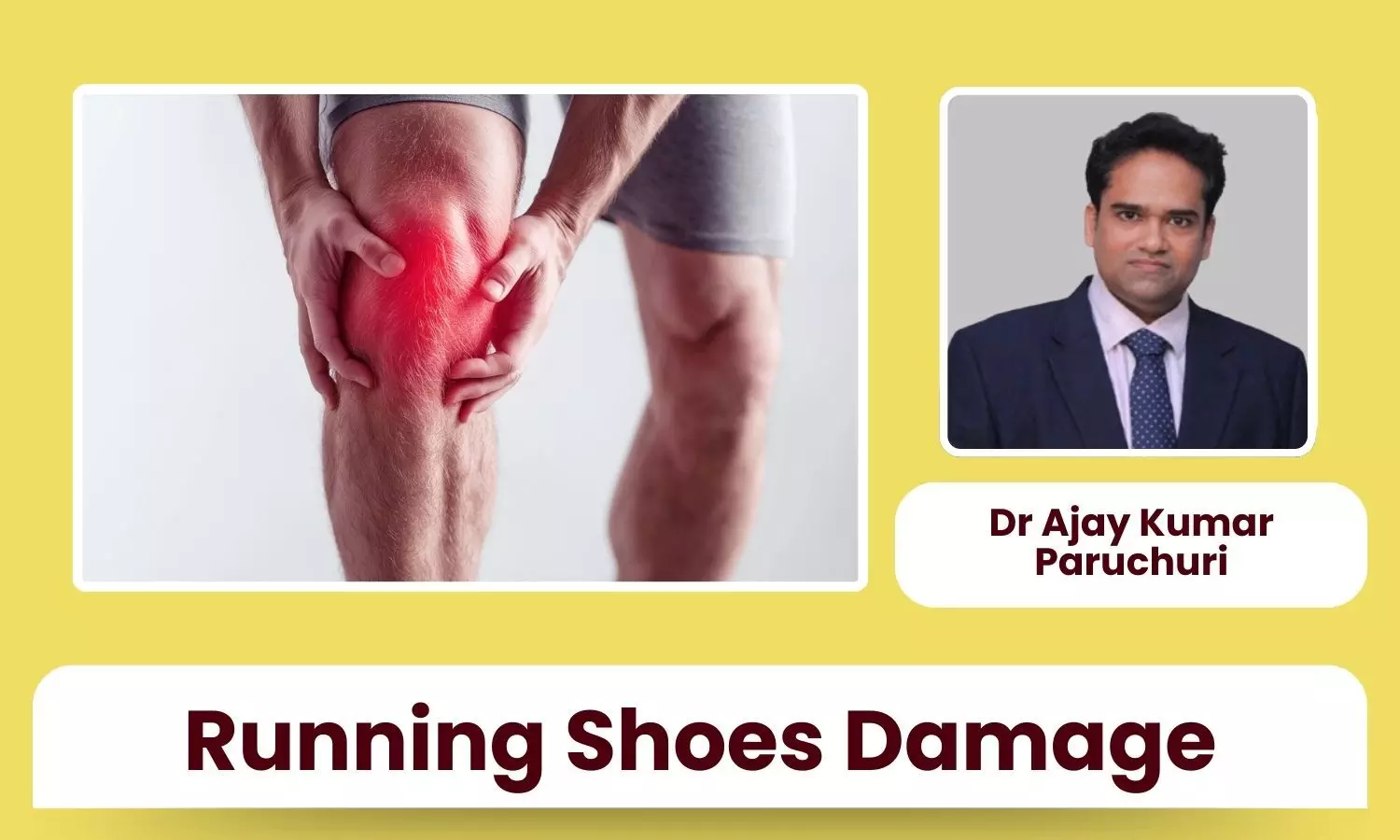
If you ask most runners what keeps their joints safe, they’ll point straight to their shoes. Cushioned, responsive, stabilising, energy-returning, a good pair promises protection with every stride. Yet in orthopaedic clinics, a different story is emerging.
More recreational runners, especially in their late twenties to early forties, are walking in with knee pain despite wearing expensive footwear. Some even report worsening symptoms after switching to “better” running shoes.
It sounds contradictory at first. How can a shoe designed to reduce impact end up stressing the knee? But when you trace the mechanics of modern running, the picture becomes clearer.
The knee doesn’t simply respond to the surface; it responds to the chain of movement above and below it—hips, ankles, stride, posture, even fatigue. And the wrong shoe can disturb that chain in ways most people never think about.
The Hidden Biomechanics Behind Running Shoe Injuries
A shoe can only help if it works with your natural gait. When it tries to “correct,” “control,” or “enhance” your stride in a way your joints aren’t built for, the load quietly shifts to the knee. Surgeons have been observing three consistent patterns:
1. Over-cushioning makes runners land harder, not softer
Thicker soles give a sense of safety, but they often change how people strike the ground. Instead of landing lightly under the body, many runners begin to land further in front, using the heel as a brake. This increases the force transmitted up the shin and into the knee.
What surprises patients is how subtle this shift feels—they think the cushioning is absorbing the shock, when in reality, the knee is absorbing more.
2. “Stability” shoes can lock the foot, forcing the knee to compensate
Feet are meant to move. When a shoe tries too hard to stop pronation, the ankle loses its natural roll. The knee then rotates more than it should during each step. Over time, this extra twist irritates the patellofemoral joint (where the kneecap glides) and the supporting ligaments.
This is one of the most common reasons young runners develop pain behind the kneecap.
3. Energy-return soles sometimes increase speed, but not control
The new generation of springy, propulsive shoes has its benefits—but only for runners with trained hip and core stability. When the shoe does the work, form tends to fall apart.
A fatigued hip allows the knee to drift inward, amplifying load on the knee’s inner compartment. This is why surgeons now see early cartilage irritation in people who were otherwise active and fit.
Why This Issue Is Growing?
There are a few lifestyle factors quietly pushing these injuries up:
- Runners are starting without strength training.
- The knee relies heavily on the quadriceps, gluteus medius, and core. Weakness here means even a well-designed shoe can’t save the joint.
- Many people run on the same surface every day.
- The body adapts to repetitive movements, and the cartilage doesn’t get the varied loading it needs for resilience.
- Work-from-home posture is affecting gait.
- Tight hip flexors and weak glutes—two very common outcomes—subtly change knee alignment while running.
- Most runners choose shoes based on marketing, not mechanics.
- Terms like “maximum cushioning” or “motion control” sound reassuring, but the shoe may be fighting the runner’s natural anatomy.
- What Knee Pain from Bad Shoe Biomechanics Feels Like
Patients often describe:
- A sharp or pulling pain under or around the kneecap
- Tightness along the outer thigh (from the IT band compensating)
- Stiffness after sitting
- Pain that increases during downhill runs
- A sensation of the knee “loading” unevenly
- What’s tricky is that the pain doesn’t always show up during the run. For many, it appears the next morning—what specialists call delayed joint stress.
- What Orthopaedic Surgeons Recommend Instead
- The solution isn’t to stop running. It’s to understand what your knee is built for and let the shoe support that, not override it.
1. Choose shoes based on your gait, not trends
A simple evaluation—either in-clinic or on a treadmill—can reveal whether you are a neutral runner, an over-pronator, or someone who lands heavily on the heel. The right shoe complements these patterns without forcing the foot.
2. Rotate between at least two pairs
Different shoes distribute force differently. Alternating them helps the knee escape repetitive stress.
3. Build strength before adding mileage
Two to three sessions a week of glute, hip, and knee-stabilising exercises dramatically reduce the load on the joint.
4. Shorten your stride slightly
Landing closer to the body reduces the braking force that strains the knee.
5. Don’t ignore early discomfort
Knee pain is almost always reversible when caught early. Most patients recover with a mix of strength work, gait correction, and switching to a shoe that actually suits their foot.
The Takeaway
Running isn’t the enemy of the knee. Poor form and mismatched shoes are. A supportive shoe should feel like an extension of your natural movement, not a device changing how you land. When the shoe and your gait align, the knee settles into its most efficient and least painful pattern.
For anyone dealing with persistent knee discomfort, an orthopaedic evaluation is worth it—not to stop you from running, but to keep you running without silently wearing down the joint.
Disclaimer: The views expressed in this article are of the author and not of Health Dialogues. The Editorial/Content team of Health Dialogues has not contributed to the writing/editing/packaging of this article.

Dr Ajay Kumar Paruchuri is a leading Orthopaedic, Arthroscopy, Trauma & Joint Replacement Surgeon with 22 years of experience, practising at CARE Hospitals, Banjara Hills, Hyderabad. A gold medallist in Orthopaedics, he completed MBBS and MS from Sardar Patel University, followed by MCh (Orthopaedics) and a Fellowship in Shoulder Arthroscopy in the UK. Dr. Paruchuri has performed over 2000 joint replacements and arthroscopic procedures, excelling in sports injuries, shoulder & knee arthroscopy, minimally invasive spine surgery, and complex trauma. He has held senior positions at major hospitals including Apollo, KIMS, and Global Hospitals, and is known for adopting advanced techniques like robotic-assisted and minimally invasive surgeries. Trusted for his patient-centric approach and evidence-based treatment, he is recognised as one of Hyderabad’s most respected orthopaedic surgeons.