

Beyond Brittle Bones: How Advanced Spine Surgery Restored a 70-Year-Old’s Mobility - Dr Kumar Shetty
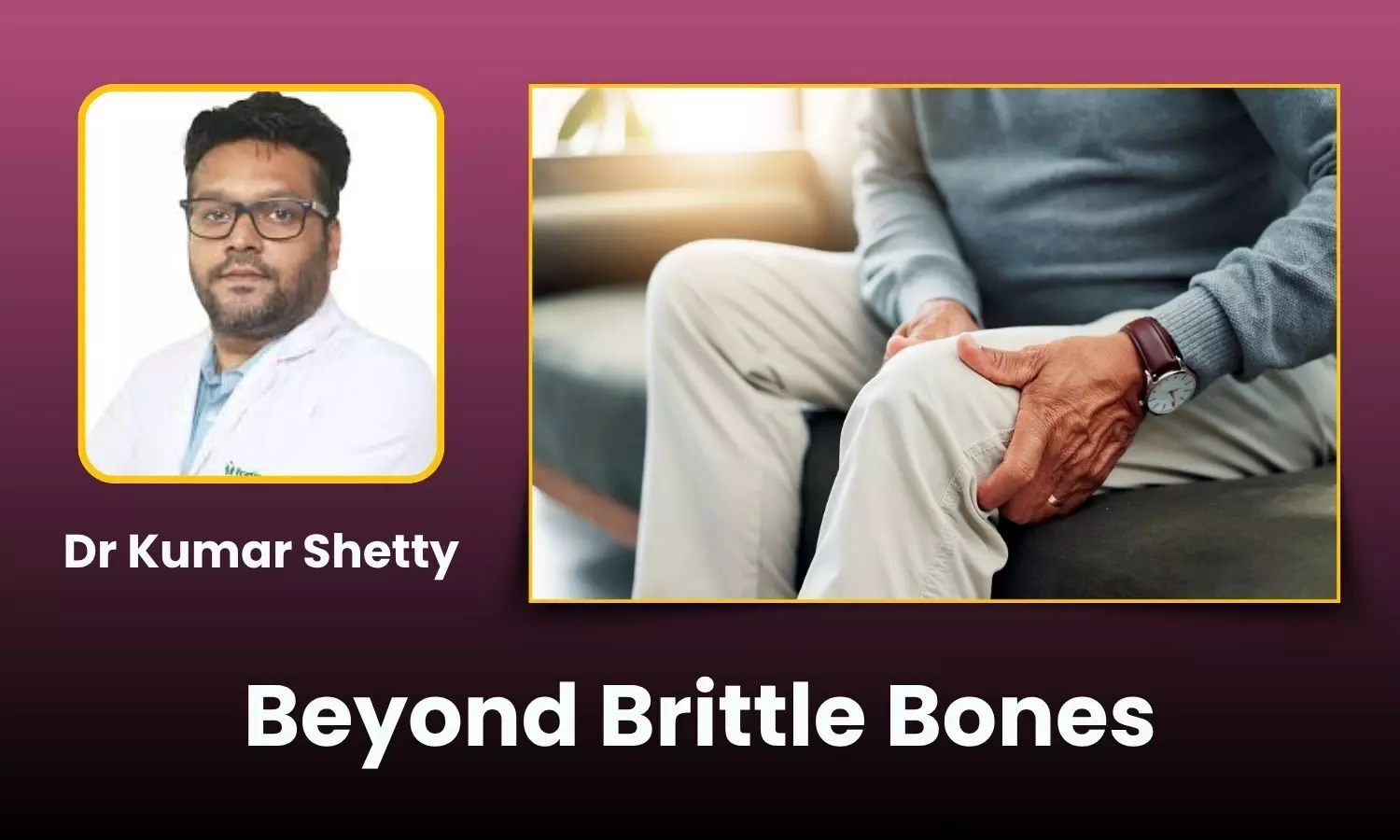
Imagine being unable to lie on your back for two weeks, forced to sleep on your chest because the pain in your spine is so agonizing. For a 70-year-old woman in Mumbai, this wasn't a nightmare - it was her daily reality.
Battling a "deadly combination" of Degenerative Spondylolisthesis (where one vertebra slips over another) and severe Osteoporosis (brittle bone disease), she was trapped in a body that seemed too fragile for traditional repair. However, a specialized surgical approach; utilizing Japanese muscle-sparing techniques and "Discoplasty" has offered her a second lease on life.
The silent crisis of the aging spine: In India, Osteoporosis is a growing menace, particularly among women. Due to hormonal changes and vitamin D deficiencies, bones become so soft that even minor stress can cause a fracture. When this is coupled with a "slipped" spine that pinches the nerves (Canal Stenosis), the result is debilitating shooting pain, numbness, and an eventual loss of mobility.
Traditionally, surgeons fix this by using metal screws and rods to stabilize the spine. But for this patient, there were two major hurdles:
Medical fragility: With a history of Rheumatoid Arthritis and heart issues, she was a high-risk candidate for the 4-5 hours of anesthesia required for standard surgery
The "Failed Implant" fear: Having suffered a previous hip implant failure, her family was terrified of putting more metal into her body.
The Innovation: SPS and Discoplasty
Faced with this dilemma, orthopaedics can look at a sophisticated Japanese technique known as SPS (Spinous Process Splitting). Unlike traditional surgery, which requires stripping away the vital stabilizer muscles of the back, this technique "splits" the bone to reach the nerves while leaving the muscles intact. This preserves the spine's natural support system and speeds up recovery.
To address the instability without using rows of metal screws, we performed Discoplasty. Using high-tech 3-D imaging for GPS-like precision, we injected specialized bone cement directly into the disc space. This acted as a "liquid internal splint," stabilizing the slippage and creating room for the pinched nerves.
A Quality of Life Restored
The results were immediate. For the first time in weeks, the patient could lie comfortably on her back. Within days, she was walking with the help of a walker. Today, seven months later, she is independent in her daily activities. By combining specialized hormonal injections to strengthen her bone density with this "minimal-hardware" surgical approach.
The Takeaway
Age and "brittle bones" are no longer a dead end for spinal health. With advanced, muscle-sparing techniques, even the most fragile patients can find a way back to a pain-free life.
Disclaimer: The views expressed in this article are of the author and not of Health Dialogues. The Editorial/Content team of Health Dialogues has not contributed to the writing/editing/packaging of this article.
Dr Kumar Shetty, an experienced Orthopedic surgeon in Mulund, Mumbai, with over 12 years in the field, practices at Fortis Hospital. He holds an MBBS from MUHS (2007) and a Diploma in Orthopaedics from CPS MUMBAI (2012). A member of the Medical Council of India (MCI), Dr. Shetty offers services such as addressing wrist problems, spinal therapy, Achilles Tendon Rupture Treatment, joint replacement surgery, and back pain treatment.