

Paras Health Gurugram Performs Rare Double Heart Surgery to Save Iraqi Patient With 15% Heart Function
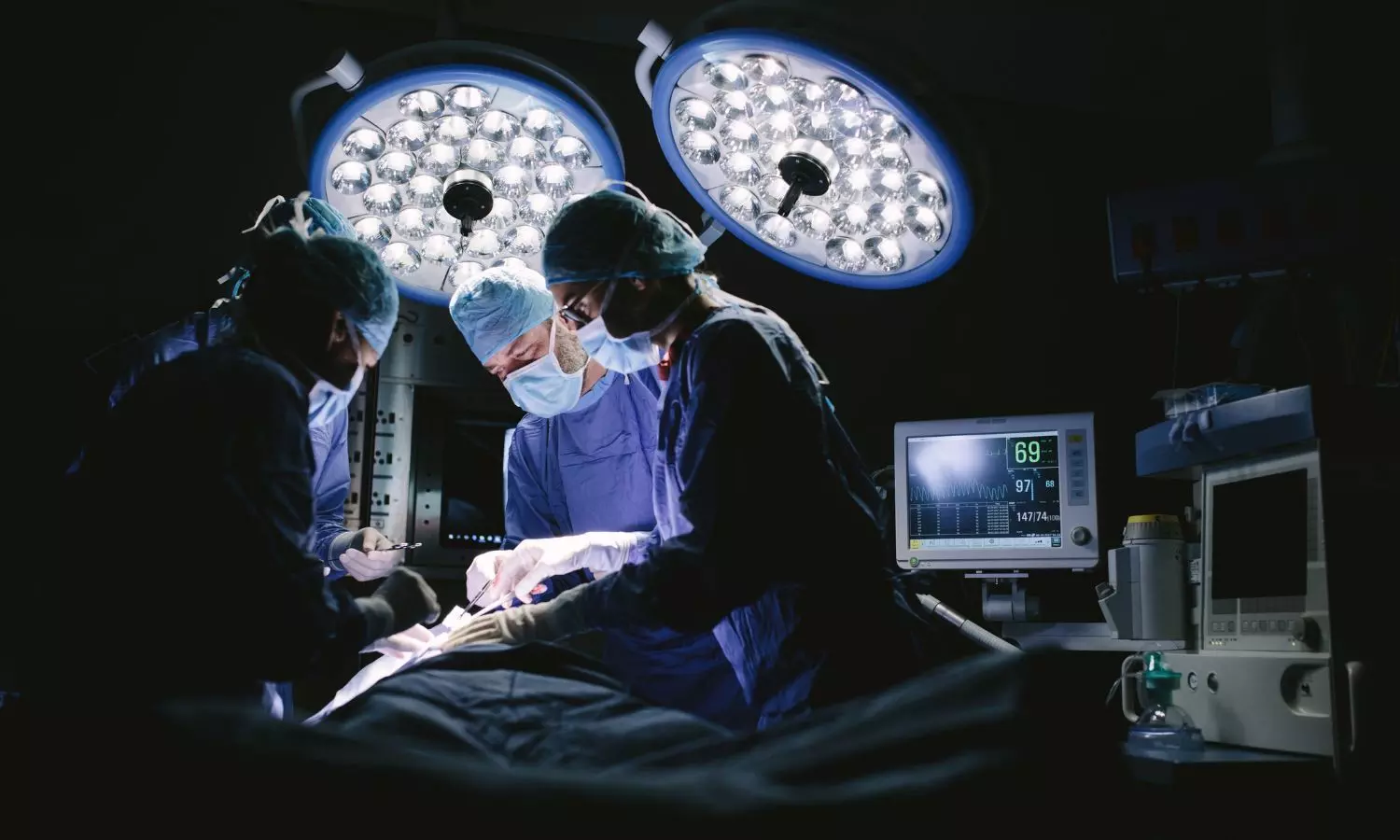
Gurugram: Paras Health Gurugram has saved the life of 58-year-old Hadi Mustafa Hamad from Iraq, who arrived at the hospital in a near-collapse state, with other organs beginning to fail. He was refused at several centres and the whole procedure was performed by cardiologists, successfully reversing his condition.
On November 11, Hamad arrived at the emergency ward following a heart attack. He was suffering from multiple organ dysfunction, including fluid-filled lungs, unstable blood pressure, and declining kidney function.
For nearly two years, his symptoms had been misdiagnosed as asthma, as diabetes was masking his chest pain. By the time the correct diagnosis was made, he was deemed too high-risk for open-heart surgery and had already been advised to undergo a heart transplant at multiple hospitals. He was put on a Ventilator and Intra Aortic Balloon Pump All hope was LOST.
Dr. Amit Bhushan, Director and Unit Head of Cardiology at Paras Health Gurugram, who led the intervention, explained the complexity of the case and why MitraClip [TEER] therapy was critical.
He said, "This was one of the most challenging cases we have seen. A single intervention alone could not have saved him. A second MitraClip was deployed; the patient went into shock, CPR was done, and after multiple episodes of shock, the patient was revived.
The MitraClip repaired the leaking valve and restored circulation, stabilising the heart enough to allow the next step. After the procedure, he remained in the CCU on a ventilator for five days, with the first three days focused on stabilizing his condition.
His total hospital stay was 10 days. This coordinated, stepwise approach was the only way to give him a real chance at survival when every other option had been exhausted. It underscores how advanced, combined interventions can make a life-saving difference in critically ill patients."
MitraClip, scientifically called TEER (Transcatheter Edge-to-Edge Repair), is a valve repair procedure performed through a vein in the leg rather than opening the chest. A small clip is attached to the leaking mitral valve to stop blood from flowing backward, helping the heart pump more efficiently.
The complex procedure involved a team of 14 specialists, including interventional and non-invasive cardiologists, a cardiac anaesthetist, an intensivist, cath lab staff, paramedical teams, and technical experts guiding the MitraClip under 3D TEE and fluoroscopy.
Key members of the cardiac sciences team included Dr. Sushant Srivastava (Chairman-CTVS), Dr. Nadeem (Senior Consultant), Dr. Ambika (Consultant), Dr. Adil (Consultant), Dr. Faisal Mufti, Dr. Nitish Sharma, Dr. Nasreen (Consultant), Dr. Sangamitra (Consultant), and Dr. Ranjan, who played crucial roles throughout the procedure and postoperative care.
The precise integration of advanced imaging with catheter-based techniques made this an exceptionally challenging intervention.
A family member of the patient “Faris Hamad” said, “Every hospital we visited told us there was no treatment left except a transplant. We had almost accepted that nothing more could be done.
At Paras Health Gurugram, the team not only explained a clear plan but also gave us confidence that recovery was possible. Watching our family member walk out of the hospital after being admitted on a ventilator felt nothing short of a turnaround we never expected.”
Following the procedures, the patient showed steady clinical improvement. Within ten days, his heart function increased from 15% to nearly 40%, cardiac swelling reduced, kidney function returned to normal, and he was able to walk and breathe without support. Earlier, he would get short of breath after just a few steps. Now, he can enjoy long morning walks without any difficulty.
This case highlights how modern heart-repair technologies such as MitraClip (TEER) are transforming the outlook for patients too high-risk for open-heart surgery, and positions Paras Health Gurugram as a centre of excellence for complex cardiac care.

Kanchan Chaurasiya joined Medical Dialogues in 2025 as a Media and Marketing Coordinator. She holds a Bachelor's degree in Arts from Delhi University and has completed certifications in digital marketing. With a strong interest in health news, content creation, hospital updates, and emerging trends, Kanchan manages social media, news coverage, and public relations activities. She coordinates media outreach, creates press releases, promotes healthcare professionals and institutions, and supports health awareness campaigns to ensure accurate, engaging, and timely communication for the medical community and the public.