

Understanding Congenital Heart Defects in Newborns - Dr Deepak Tirthani
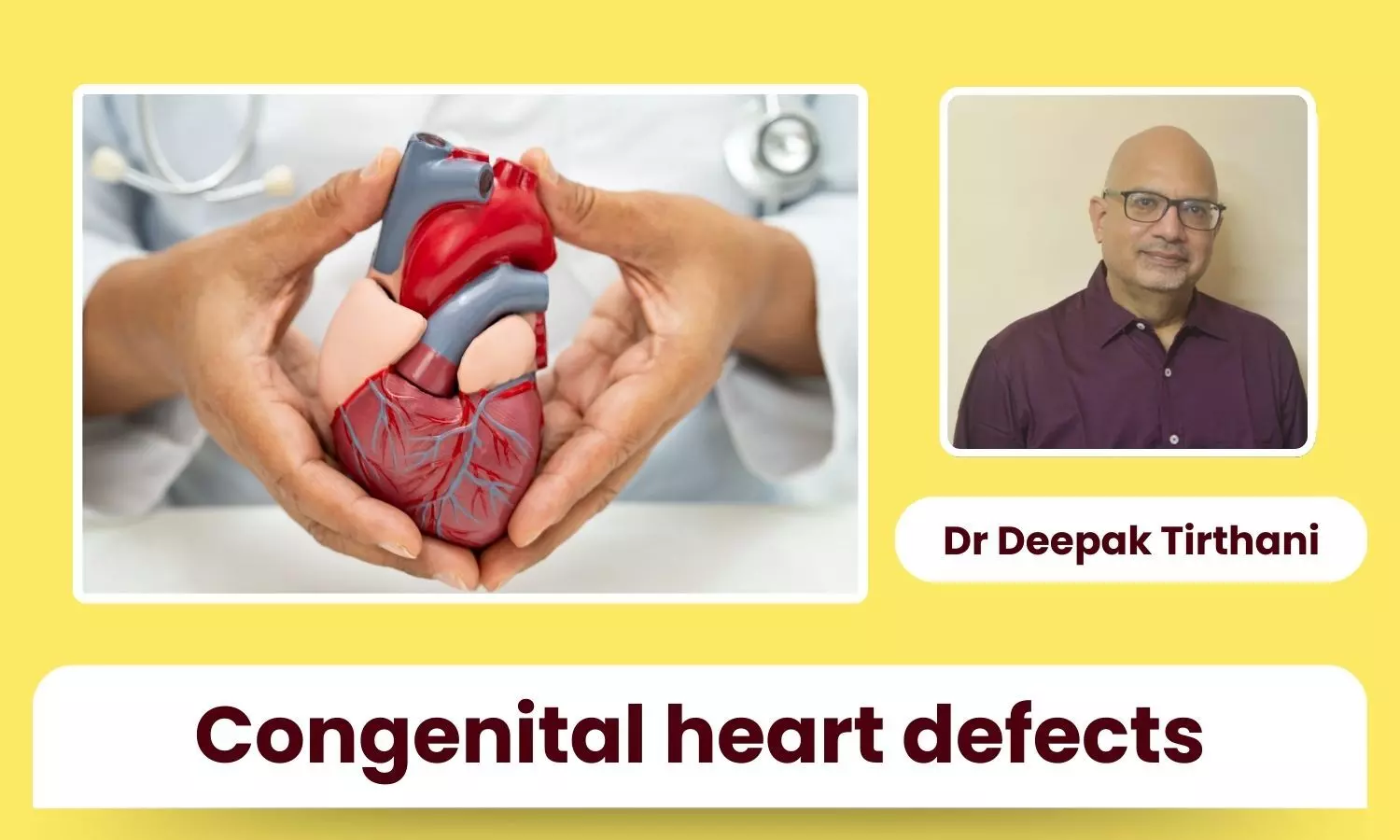
As a doctor who has spent years caring for newborns and their families, few moments are as emotionally charged as explaining a congenital heart defect to new parents. A congenital heart defect (CHD) simply means that a baby is born with a structural problem in the heart.
It is one of the most common birth conditions, affecting nearly 1 in every 100 babies, and its severity can range from very mild to life-threatening. For parents, hearing this diagnosis can be frightening, but it is important to remember that today’s medical science offers more hope than ever before.
One of the most important parts of understanding the development of CHDs is understanding heart development. The heart forms within the first few weeks of the baby's gestation and later becomes divided into the chambers, valves, and major blood vessels of the heart.
In order for this to occur, development must occur with precision. If anything goes wrong, the heart may not develop appropriately. Notably, some defects involve the development of abnormal holes between the heart chambers: this includes atrial septal defects and ventricular septal defects. Others are related to the heart valves (the valvular defects) or the outflow of blood from the heart (eg, tetralogy of Fallot, transposition of the great arteries).
In most cases, the cause of the structural heart defects is unknown and not related to anything the patient or his or her parents did or did not do. Not every congenital heart defect causes symptoms immediately. Some babies look completely healthy at birth, and the problem is detected only when a doctor hears a heart murmur or when routine newborn screening is performed.
Others may show signs early on, such as rapid breathing, bluish discoloration of the lips or fingers, difficulty in feeding, poor weight gain, or excessive sweating. These signs tell us that the heart is struggling to supply the body with enough oxygen-rich blood, and they signal the need for urgent evaluation.
One of the most important tools we have today is echocardiography, an ultrasound of the heart which allows us to visualize the heart's anatomy and function in real time. It is a painless, non-intrusive study that in most cases allows us to accurately diagnose most defects and their severity.
Some small defects may close on their own as the baby grows and are only followed with little to no intervention; others may be treated with medications, catheter-based procedures, or surgery, usually within the first days or weeks of life.
What I always tell the parents about outcomes for babies with congenital heart disorders is that they have improved enormously over the last couple of decades so as a result of better neonatal care, pediatric cardiology and cardiac surgical care, most children with congenital heart defects can look forward to being full, active adults. If diagnosed early, with the right treatment and follow-up, the prognosis is good.
In summary, while it may feel overwhelming to have a diagnosis of heart defect, you are not alone. A team of doctors, nurses and specialists will walk this journey with you, taking care of your baby and your family every step of the way.
Disclaimer: The views expressed in this article are of the author and not of Health Dialogues. The Editorial/Content team of Health Dialogues has not contributed to the writing/editing/packaging of this article.

Dr Deepak Tirthani, Consultant Paediatric at Holy Family Hospital, Mumbai. Dr. Deepak P. Tirthani MD (Paed), DCH (Sp.Paediatrics and Neonatology) Have worked with the hospital since 16 years. Conceptualised the new NICU. Love teaching young doctors.