

Neglected Spinal TB Leaves 65-Year-Old Bedridden; Surgery Restores Mobility
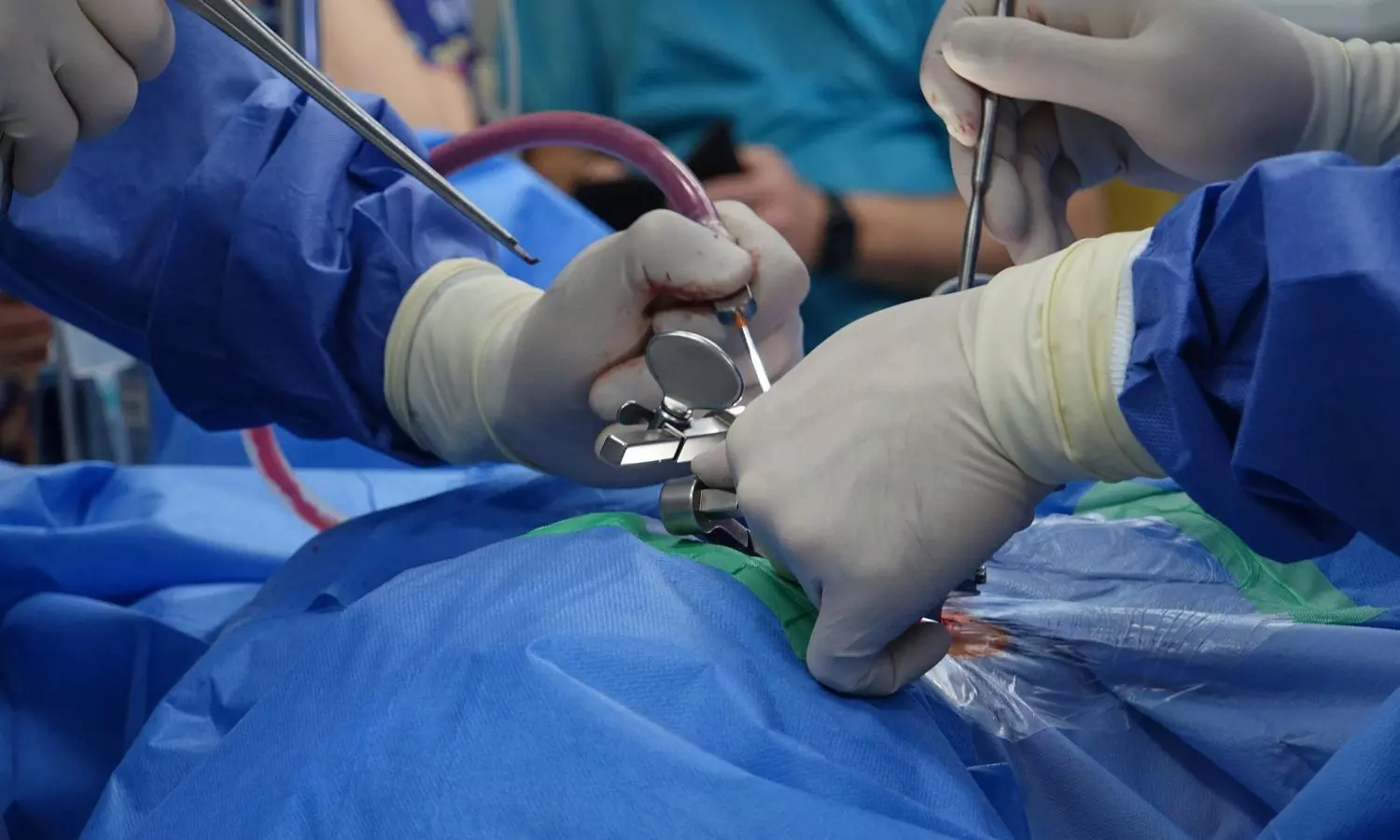
Thane: A 65-year-old man from Neral, who had been experiencing severe back pain and a gradually worsening spinal deformity for one year, has regained his ability to walk after undergoing a complex spine surgery at KIMS Hospitals, Thane. His case highlights how untreated spinal tuberculosis (TB) can silently progress and lead to serious disability if not detected in time.
The patient had been suffering from continuous back pain that slowly caused his spine to bend forward. Over time, he lost his appetite, experienced significant weight loss, and found it difficult to sit or stand for long periods.
Walking became increasingly difficult, and in the last six months, he was unable to get out of bed without help. Despite visiting multiple doctors and taking pain medications, his symptoms continued to worsen, affecting his daily routine and overall quality of life.
When he visited KIMS Hospitals, Thane, Dr. Amogh Zawar, Consultant Spine Surgeon, conducted a detailed evaluation. Imaging studies revealed a severely bent spine, destruction of one of the vertebral bones, and a possible collection near the spinal cord.
MRI and CT scans strongly pointed toward spinal tuberculosis, a serious form of TB that affects the bones of the spine rather than the lungs. Because the disease had advanced significantly, corrective surgery was necessary to stabilize the spine and prevent the risk of paralysis.
The surgical team, led by Dr. Amogh Zawar, planned a complex reconstruction procedure involving correction of the spinal deformity, removal of infected tissue, and stabilization using implants. A major challenge in such advanced cases is the high risk of nerve damage during surgery.
To minimize this risk, the team used intraoperative neuromonitoring, a technology that continuously monitors nerve signals from the legs. This allows surgeons to make immediate adjustments if nerve activity decreases, significantly reducing the chances of paralysis.
The tissue samples sent for analysis confirmed tuberculosis, and the patient was started on a full course of anti-TB medication, which typically continues for nine to twelve months. The patient recovered remarkably well after the surgery.
He was able to stand and walk the very next day and was discharged on the fourth day after the procedure. Follow-up X-rays showed good healing and stability. Within three months, he resumed his work and now travels independently by local train from Neral to Vangani—something he had been unable to do for months before treatment.
Dr. Amogh Zawar, Consultant Spine Surgeon at KIMS Hospitals Thane, who led the surgery, said, “Spinal tuberculosis often progresses silently, which is why many patients ignore the early symptoms. Persistent back pain, especially when accompanied by weight loss, loss of appetite, or difficulty walking, should never be dismissed. Early diagnosis with simple tests can prevent deformity, nerve injury, and the need for major corrective surgery.”
He added, “TB does not only affect the lungs. Spinal TB is fairly common in India, and with timely treatment, patients can return to leading active and independent lives.” The case serves as an important reminder for the public: chronic back pain should not be overlooked, particularly when it is accompanied by general symptoms of ill health.
Early medical evaluation can help detect spinal TB before it causes irreversible damage and can ensure significantly better outcomes for patients.

Kanchan Chaurasiya joined Medical Dialogues in 2025 as a Media and Marketing Coordinator. She holds a Bachelor's degree in Arts from Delhi University and has completed certifications in digital marketing. With a strong interest in health news, content creation, hospital updates, and emerging trends, Kanchan manages social media, news coverage, and public relations activities. She coordinates media outreach, creates press releases, promotes healthcare professionals and institutions, and supports health awareness campaigns to ensure accurate, engaging, and timely communication for the medical community and the public.