
3 Deadly Brain Conditions, 2 High-Risk Surgeries, Cure in One Go, NewEra Hospital Saves 54-Year-Old Woman
An extremely rare case, the patient had two large brain tumours on opposite sides, along with a major subdural hematoma.
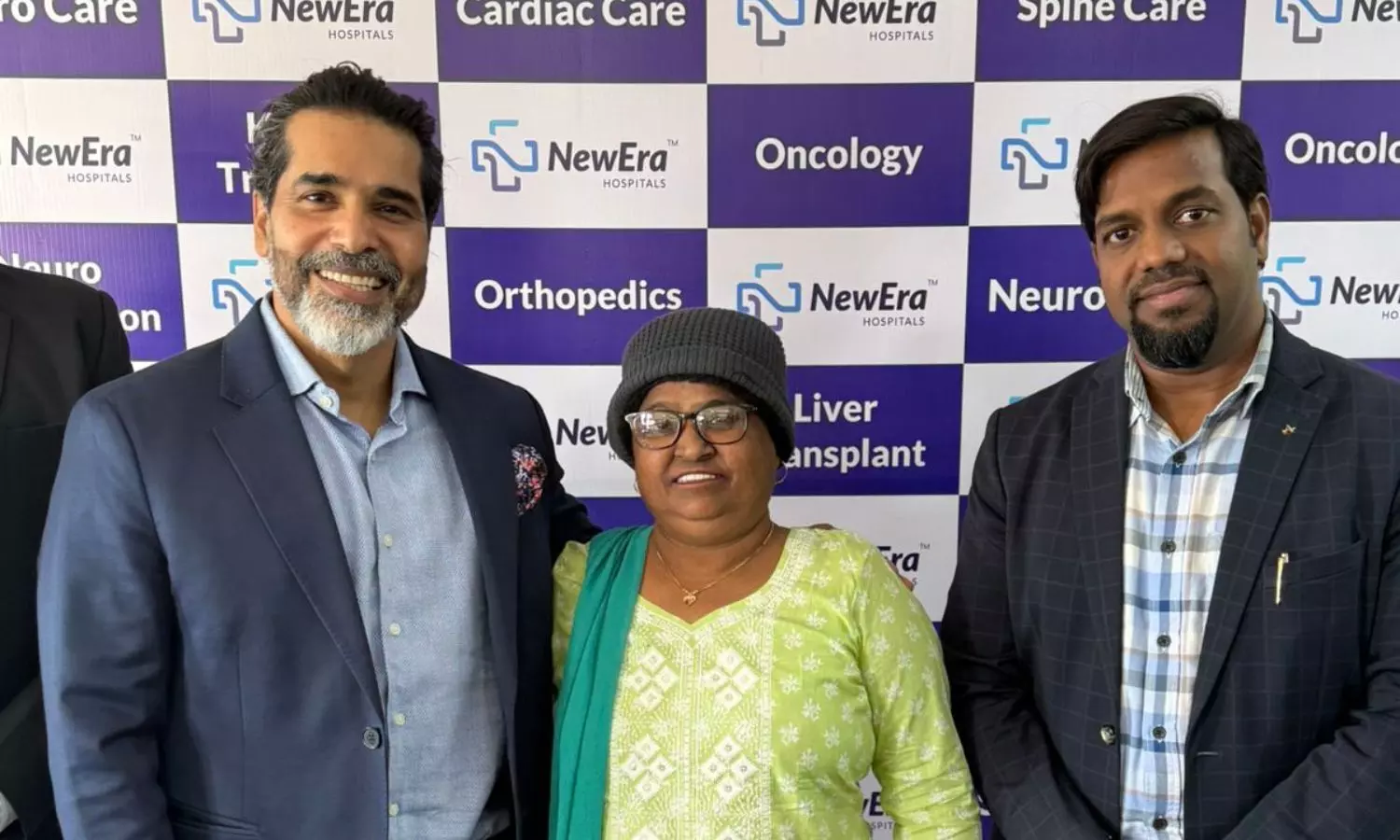
In a powerful example of advanced neurosurgical care and timely decision-making, a 54-year-old woman has made a strong recovery after undergoing an extremely complex brain surgery at NewEra Hospital, Navi Mumbai. What was initially diagnosed and referred to as a single large brain tumour, revealed a subdural hematoma (brain bleed) and a brain tumour on the opposite side of the brain, also turning the case into a rare and high-risk neurosurgical emergency.
The patient underwent two extremely high-risk brain surgeries, emergency evacuation of a massive subdural hematoma and excision of two large brain tumours, both successfully performed in a single operative sitting by *Dr. Sunil Kutty, Consultant Neurosurgeon, NewEra Hospital, and his team.* This rare, one-go surgical approach marked a significant milestone in managing complicated neurological emergencies. The patient, who was brought into the hospital barely able to stand, walked out stable, alert, and independent due to timely intervention and expert care.
54-year-old Patient Mrs Suman Pokhare, a resident of KoperKhairane, Navi Mumbai, presented with worsening weakness, imbalance while walking for 15 days, and difficulty in daily activities. Brain imaging showed a large subacute subdural hematoma on one side, severe enough to compress the brain and demand urgent surgery. On the opposite side, a large brain tumour nearly the size of a golf ball was also seen, which independently required surgical removal.
With her condition worsening and uncertainty ahead, she arrived seeking hope. Each moment mattered, as the skilled team of doctors prepared to fight not just for recovery but for her life. Following admission, primary treatment was initiated in the Emergency Room, after which she was shifted to the ICU. She was started on intravenous antibiotics, antiepileptic medications, and supportive care. Considering the seriousness of the condition and the pressure effect on the brain, surgical intervention was planned the very next morning.
Dr Sunil Kutty, a leading Neurosurgeon (Brain & Spine) at NewEra Hospital, Vashi, Navi Mumbai said, “On 12 November 2025, the patient underwent craniotomy, a highly delicate brain surgery where a small portion of the skull is carefully opened to access the brain and treat life-threatening conditions such as bleeding or tumors, and then securely placed back to allow safe healing. What was planned as surgery for a dangerous subdural brain bleed soon turned into an intense and defining moment in the operating room.
As we evacuated the clot, we encountered a hidden tumour infiltrating the brain’s protective covering and compressing the brain, something that was suspected and discussed with the patient and relatives, but had not been clearly visible on scans because the blood clot was hiding it. This made the case exceptionally rare. In routine practice, we usually deal with one major brain pathology at a time.
Here, the patient had three serious conditions simultaneously: two large brain tumours and a large subdural hematoma on opposite sides of the brain. Each of these alone carries high risks such as brain swelling, permanent neurological damage, seizures, paralysis, or even death, and would normally require separate surgeries. Managing all three together demanded meticulous planning, constant decision-making during surgery, and extreme precision.
Dr Sunil Kutty further added, “ Most brain surgeries are done on one side of the brain to remove pathologies. We do operate on both sides, and that happens usually for bilateral subdural hematomas, but dealing with 2 tumors and an associated subdural hematoma is extremely rare. Brain tumours occur in around 4 in 1 lakh people, and less than 1% of these brain tumours have bilateral brain tumours, and having an associated subdural hematoma is even rarer.
The patient underwent two extremely high-risk brain surgeries: emergency evacuation of a massive subdural hematoma and excision of two large brain tumours, both successfully performed in a single operative sitting that lasted 5 hours, removing two brain tumours measuring approximately 4.5 cm and 2 cm in diameter, along with their attachments, as well as complete evacuation of the large subdural clot. Successfully addressing all three threats at once helped avoid multiple high-risk surgeries, reduced the risk of complications, shortened recovery time, and ultimately saved the patient’s life. What began as a moment of deep uncertainty ended in survival, recovery, and renewed hope.”
With continuous medical care and physiotherapy support, the patient showed steady improvement. “On 13 November 2025, she was shifted from the ICU to the room. Over the following days, her recovery progressed smoothly; she remained stable, experienced no pain at the surgical site, showed no neurological deficits, and was able to move all four limbs independently. Postoperative scans showed complete excision of the tumour and evacuation of the subdural hematoma. She gradually regained confidence in walking and was discharged on day 3 of the surgery. On follow-up in December, the patient was doing well, with steady recovery and no new neurological concerns.
Such positive outcomes underline the critical importance of timely intervention, accurate diagnosis, advanced imaging, and a well-coordinated multidisciplinary approach in managing complex neurosurgical emergencies," said Dr Sunil Kutty."
“I was terrified when I was told that there was not just a brain bleed, but two tumours as well. I could barely walk and feared the worst. Dr Sunil Kutty and his team explained everything to me with patience and gave me the courage to face the surgery. Every day after the operation. Now, I am walking, alert, and going home with hope in my heart. I truly feel I have been given a second chance at life,” concluded the elated patient, Mrs Suman Pokhare.
Dr. Mataprasad B Gupta, Vice President & CEO, said, "NewEra Hospital is equipped with state-of-the-art facilities, advanced imaging, and highly trained teams to handle even the most complex neurological emergencies. In critical moments, quick diagnosis, precise imaging, and seamless coordination make all the difference between life and loss. Our focus is always on acting fast, treating accurately, and giving patients the best possible chance at recovery. Saving lives in the most challenging situations is not just our expertise; it is our commitment.”

Kanchan Chaurasiya joined Medical Dialogues in 2025 as a Media and Marketing Coordinator. She holds a Bachelor's degree in Arts from Delhi University and has completed certifications in digital marketing. With a strong interest in health news, content creation, hospital updates, and emerging trends, Kanchan manages social media, news coverage, and public relations activities. She coordinates media outreach, creates press releases, promotes healthcare professionals and institutions, and supports health awareness campaigns to ensure accurate, engaging, and timely communication for the medical community and the public.