

73-Year-Old Woman Treated for Rare Organs-in-Chest Condition
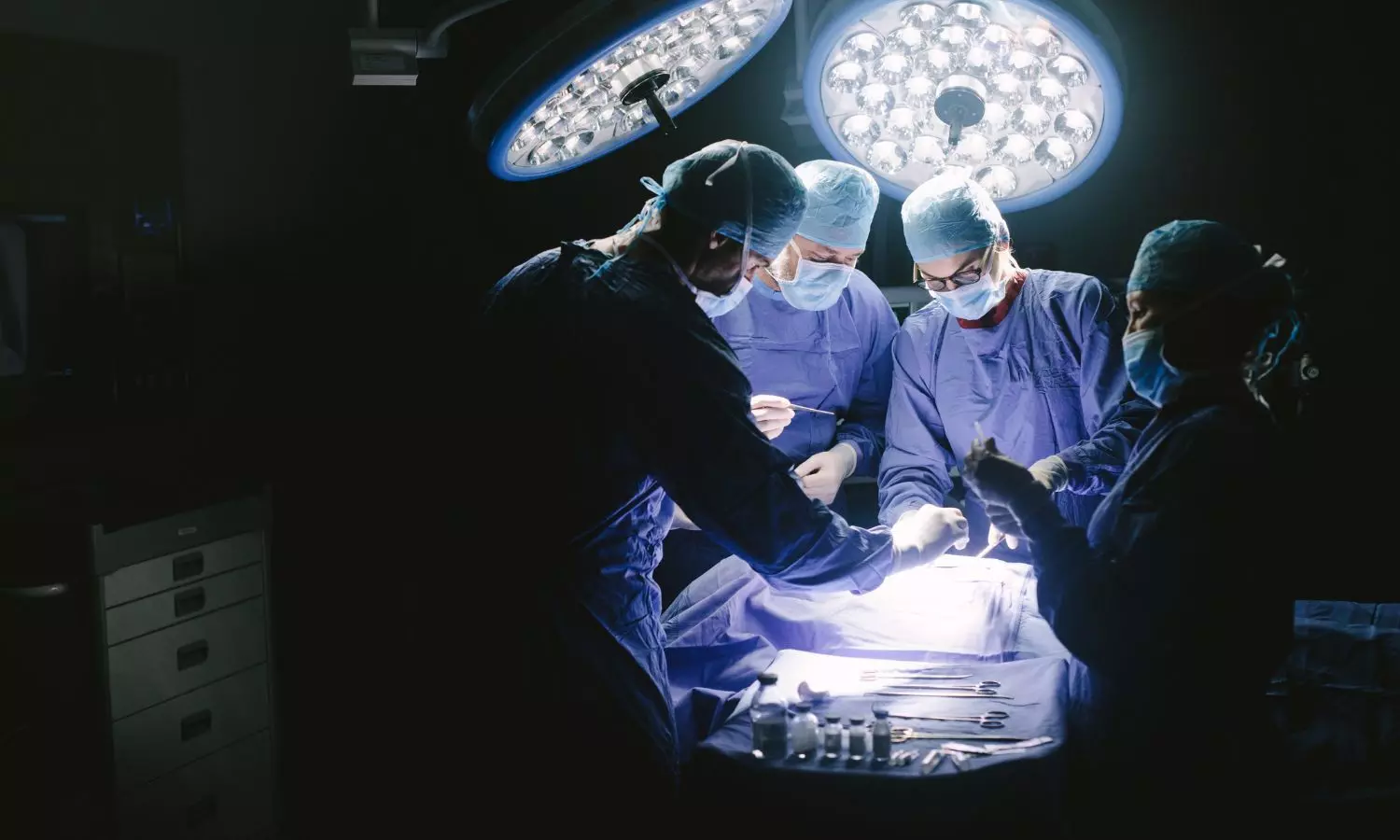
In an extremely rare case, Doctors at Fortis Hospital, Nagarbhavi, successfully treated a 73-year-old woman diagnosed with a rare Type IV Hiatal Hernia - a condition in which abdominal organs migrate into the chest cavity through an enlarged opening in the diaphragm. The complex condition was managed through a minimally invasive surgical procedure performed by Dr Pranav Honnavara Srinivasan, Laparoscopic and Gastrointestinal Surgeon at Fortis Hospital, Nagarbhavi, along with his surgical team.
Patient, had been experiencing persistent abdominal pain, vomiting, loss of appetite, and progressive breathlessness for 3 months, for which she was admitted to Fortis Nagarbhavi. Following medical evaluation, she was diagnosed with a rare and serious Type IV paraesophageal hernia, an advanced condition where multiple abdominal organs, including the stomach, part of the pancreas, the large intestine, and blood vessels supplying the spleen, had migrated into the chest cavity. The patient also had fluid accumulation around both lungs, along with underlying medical conditions including heart disease, hypothyroidism, and respiratory complications.
Several risk factors were associated with the surgery, given the patient’s age, history of angioplasty, and compromised lung function. Such severe hiatal hernias can lead to breathing difficulties, digestive complications, and compression of nearby structures, often making treatment prolonged and challenging. However, after detailed counselling and evaluation by a multidisciplinary team comprising physicians, pulmonologists, cardiologists and gastroenterologists led by Dr Pranav, a minimally invasive surgical approach to reposition the organs and repair the diaphragmatic defect was planned.
Giving details of the case, Dr Pranav Honnavara Srinivasan, Laparoscopic and Gastrointestinal Surgeon at Fortis Hospital, Nagarbhavi, Bengaluru, said: “This was a high-risk case. The patient underwent laparoscopic reduction of the herniated organs through small incisions, repositioning them back into the abdominal cavity under general anesthesia.
The opening in the diaphragm was closed using a mesh, and an additional procedure called Nissen fundoplication was performed to prevent recurrence and control acid reflux. Following the procedure, the patient was supported with Continuous Positive Airway Pressure (CPAP) and was discharged within a week in stable condition. Reduced blood flow had also affected a
portion of the spleen, making the condition more complex. Through careful surgical planning and coordinated multidisciplinary care, we were able to safely reposition the organs, repair the diaphragm, and stabilize the patient.”
“Early diagnosis and timely surgical intervention are crucial, particularly in elderly patients with underlying health conditions,” added Dr Pranav.
Sharing her experience, the patient said: “Initially, I was very worried and frightened because I was experiencing serious breathing problems. When the doctors explained that some of my abdominal organs had moved into my chest, I was scared and did not know what to do. However, the medical team at Fortis Hospital, Nagarbhavi, reassured me and guided me with great care and confidence. Thanks to their treatment, I have now recovered well and resumed my normal routine.”
Mr Ratheef Naik, Facility Director, Fortis Hospital, Nagarbhavi, said: “Advanced laparoscopic techniques play an important role in treating complex thoracoabdominal conditions, even in patients with high health risks. At Fortis Nagarbhavi, we are strengthening our expertise in minimally invasive surgery to manage complex cases with better precision and faster recovery. With careful planning and a coordinated medical approach, such challenging cases can be managed safely while ensuring the best possible outcomes.”

Kanchan Chaurasiya joined Medical Dialogues in 2025 as a Media and Marketing Coordinator. She holds a Bachelor's degree in Arts from Delhi University and has completed certifications in digital marketing. With a strong interest in health news, content creation, hospital updates, and emerging trends, Kanchan manages social media, news coverage, and public relations activities. She coordinates media outreach, creates press releases, promotes healthcare professionals and institutions, and supports health awareness campaigns to ensure accurate, engaging, and timely communication for the medical community and the public.