

75-Year-Old Woman Successfully Undergoes Single-Stage Surgery for Multiple Brain Tumours
Doctors removed the Tumours from the specific regions of the brain responsible for critical functions like Vision and movement.
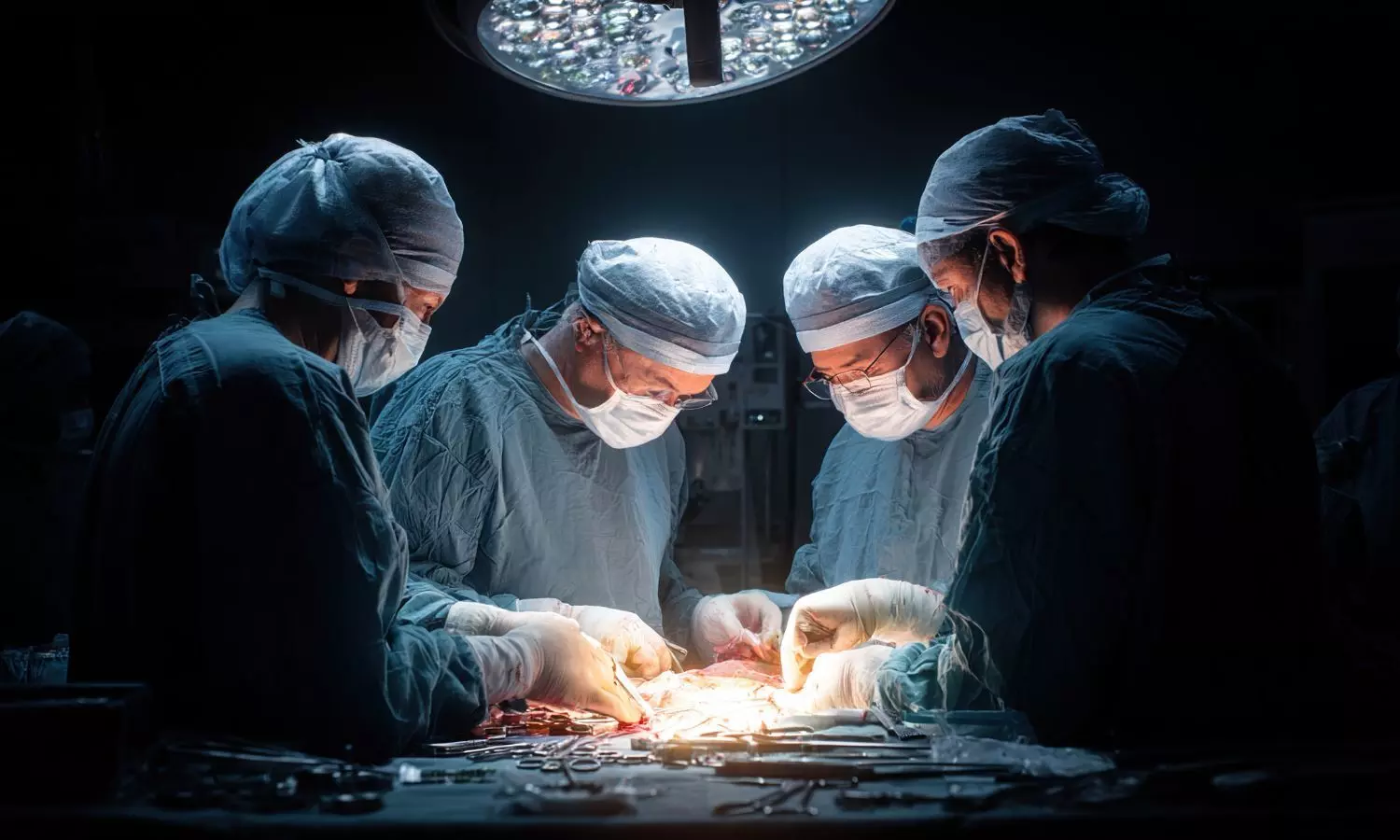
Doctors at Gleneagles Hospital, Chennai, have successfully performed a complex single-stage surgery to remove multiple meningiomas (brain tumours) from a 75-year-old woman. The Team of Doctors spearheaded by Dr Nigel Symss, HOD, and Senior Consultant Neurosurgeon, and Dr Venkatesan S, Senior Neurosurgeon, Gleneagles Hospital, Chennai, performed the rare and challenging procedure considering the patient’s age.
They removed the larger lesion measuring 4.5 X 5.0 cms located in the occipital lobe controlling vision, and the smaller lesion measuring approximately 2.8 X 3.0 cms located in the motor cortex area of the brain in a single-stage surgery lasting for five hours.
The elderly patient from Puducherry visited Gleneagles Hospital, Chennai, in Dec 2025 with a history of progressive decreased vision in both eyes and weakness of the left upper limb of two months' duration. She also had on-and-off headaches.
Her symptomsare progressively worsening. Her comorbidities were diabetes mellitus and hypertension for several years. A detailed MRI scan revealed the presence of multiple meningiomas (Brain Tumours) located in different regions of the brain, causing pressure on vital neurological structures causing her loss of vision and weakness of the left upper limb.
Considering her age, 75 years, and with comorbidities, the patient and family were reluctant to even consider surgery. They were counselled by Doctors at Gleneagles Hospital, Chennai, that both lesions were in critical locations, one affecting her vision and the other causing weakness of the left upper limb, and in time, the tumours will increase in size and cause further deterioration in her neurological status.
The patient’s family finally agreed to the surgery. The pre-surgical evaluation by the Doctor’s team, including neurocritical care, anaesthesia, and Clinical Leads Dr Prasad Kumaresan and Dr Mohana Selvi, decided to proceed with single-stage surgery and remove both tumours.
The surgical planning was challenging since the tumours were situated apart, one in the occipital region and one in the frontal region. It was challenging to position the patient and head such that there is easy access to both tumours without changing the patient's position.
The larger tumour was addressed first. With the help of advanced technology, brain mapping, navigation guidance, and ultramicroneurosurgery techniques, small minimally invasive techniques were used to reach the occipital tumour, which was totally resected and next the smaller frontal tumour was addressed similarly, and both tumours were removed successfully.
“Multiple meningiomas in eloquent brain areas, both symptomatic is rare, and performing a single-stage surgery in a 75-year-old patient is extremely challenging due to age-related risks. However, with meticulous planning, advanced neuro-monitoring and experienced surgical expertise, we were able to safely remove both tumours in one procedure, Said Dr. Nigel Symss, HOD, and Senior Consultant Neurosurgeon, Gleneagles Hospital Chennai. Minimally invasive approaches in the surgical treatment of dual intracranial meningiomas reduce the surgical trauma and operating hours by several time and in the case of patients with symptomatic meningiomas in eloquent areas, the goal is to balance maximal tumour control with the preservation of neurological function and quality of life, added Dr Nigel Symms.
“This successful surgery of removing multiple brain tumours from a 75-year-old patient reinforces Gleneagles Hospital Chennai’s commitment to delivering advanced neurosurgical care and handling complex, high-risk neurological conditions. We are proud to have delivered a positive outcome through meticulous planning, precision surgery, and coordinated multidisciplinary care,” said Ms Niranjani, Chief Operating Officer & Hospital Head, Gleneagles Hospitals, Chennai.
Post surgery patient was monitored in the neuro ICU. She had an uneventful postoperative period. Post operative CT scan brain confirmed total excision of both tumours. She had no new neurological deficits and was discharged home on the fourth postoperative day with her left upper limb weakness improving.
Dr Bhumika Maikhuri is a Consultant Orthodontist at Sanjeevan Hospital, Delhi. She is also working as a Correspondent and a Medical Writer at Medical Dialogues. She completed her BDS from Dr D Y patil dental college and MDS from Kalinga institute of dental sciences. Apart from dentistry, she has a strong research and scientific writing acumen. At Medical Dialogues, She focusses on medical news, dental news, dental FAQ and medical writing etc.