

AHPI West UP Calls for adoption of ‘CIBIL-like’ framework for Insurers
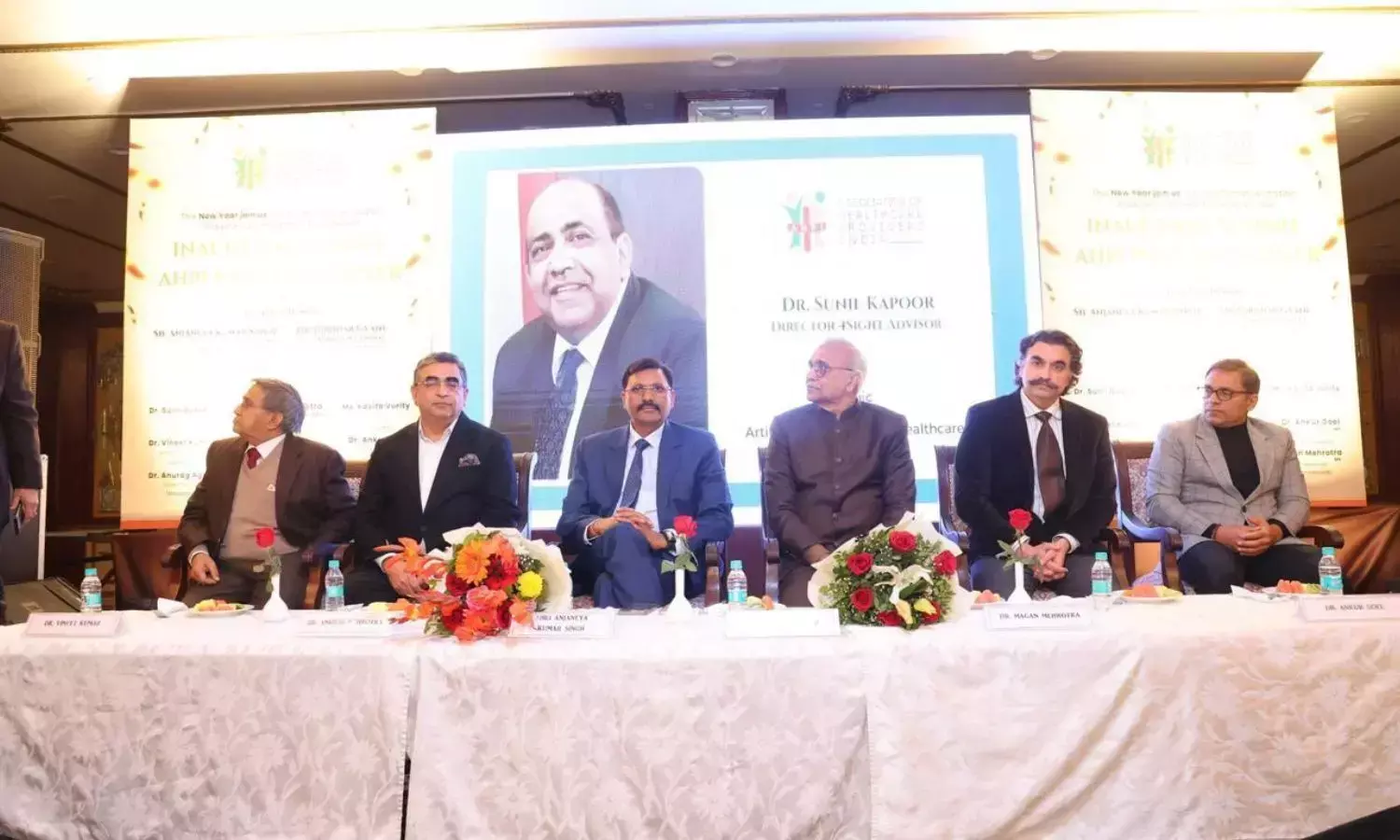
The West UP Chapter of the Association of Healthcare Providers India (AHPI) called for the establishment of a ‘CIBIL-like’ rating framework for insurers and TPAs so as to bring transparency and accountability in the healthcare sector.
Addressing the Inaugural Summit of the AHPI UP West Chapter, Shri Aunjaneya Kumar Singh, Commissioner, Moradabad Division, called upon hospitals to align institutional data with local administrative insights, noting that the integration of hospital-level information with district planning is central to effective policy formulation including improvements in various schemes of the Government.
Dr. Girdhar Gyani, Director General, AHPI, reflected on AHPI’s evolution into a credible, evidence-driven platform, highlighting its work on previously unexamined datasets such as accurate national bed capacity.
Drawing attention to India’s low beds-per-1,000 population ratio, he emphasized the need for capacity expansion, particularly in underserved regions, and stressed that regular, predictable payouts under schemes like Ayushman Bharat are essential for hospital sustainability.
Dr. Anurag Mehrotra, President of the AHPI West UP Chapter, said, “In bank and non-banking financial space, tools like CIBIL scores provide a clear benchmark for transparency and accountability. Healthcare deserves an equivalent framework.
The current behavior of Insurance companies and TPA remains largely opaque; a standardized rating system will empower patients to make informed choices and ensure hospitals are treated as fair partners in care delivery. Such a mechanism will also benefit patients immensely”
It is pertinent to mention here that in recent times, hospitals and insurance companies have been in conflict with each other primarily over reimbursement rates, non-transparent claim deductions as well as due to delayed payments.
These ongoing disputes have led to temporary suspensions of cashless services in some hospitals. While hospitals claim that medical inflation is rising at 12-14% annually, insurance companies are willing to reimburse at an average reimbursement rate. The lack of standardized treatment costs is also an area of conflict between healthcare providers and insurance companies.
Government schemes like Ayushman Bharat, ESIC and CGHS too suffer from certain structural issues. Package rates under these schemes are frequently far below actual treatment cost, especially for complex procedures and critical care. On top of that, payments are often delayed for months, with unexplained deductions and repeated queries.
“The conflict between hospitals and insurance companies ultimately impact patients. Thus, a mechanism needs to be formulated at the earliest,” Dr. Anurag Mehrotra
The Inaugural Summit of the AHPI UP West Chapter saw a full-house assembly of the medical and healthcare fraternity, with representation from leading hospitals across Western Uttar Pradesh. Senior clinicians, hospital founders, administrators, and healthcare leaders from the Moradabad Division, Noida, Ghaziabad, Meerut, Rampur, Amroha, and Sambhal were present, reflecting the region’s collective engagement with the evolving healthcare discourse.
Dr. Sunil Kapoor, Director, 4Sight Advisor addressed the technological dimension, outlining how artificial intelligence is increasingly integral to healthcare delivery. He demonstrated AI’s relevance in diagnostics, clinical decision-making, and operational efficiency, while emphasizing the importance of ethical and responsible implementation.

Khushi Chittoria joined Medical Dialogues in 2025 as a Media and Editorial Intern. She holds a degree in Bachelor of Arts in Journalism and Mass Communication from IP University and has completed certifications in content writing. She has a strong interest in anchoring, content writing, and editing. At Medical Dialogues, Khushi works in the editorial department, web stories and anchoring.