

AIIMS Delhi performed over 1,000 robotic surgeries in last 13 months
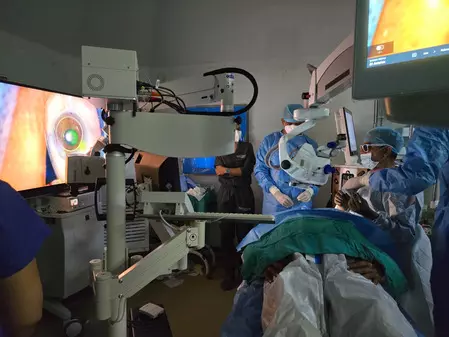
New Delhi: The All India Institute of Medical Sciences (AIIMS) Delhi has completed over 1,000 robotic surgeries in the past 13 months, the Institute announced on Tuesday.
Robotic surgery was introduced at the Department of Surgical Disciplines at AIIMS more than a year ago to tackle complex surgical challenges.
The advanced surgical robot has performed a wide range of procedures, including hepatobiliary surgeries like pancreaticoduodenectomy, gastrectomy, esophagectomy, colectomy, and anterior resection for gastrointestinal cancers.
It has also been used for complex abdominal wall reconstructions for hernias, kidney transplants, and minimally invasive resections of the thyroid, parathyroid, adrenal glands, and pancreas for endocrine tumors, AIIMS stated.
“This is a significant development, as the department becomes one of the first government hospital units in India to adopt this level of robotic surgical technology,” the Institute said.
The implementation of robotic surgery is expanding access to minimally invasive, highly precise procedures for a wider range of patients, particularly in a public healthcare setting. While private hospitals in major cities like Delhi, Mumbai, and Chennai have been using robotic systems in fields such as urology and gynecology for years, their use in government hospitals, especially for general surgery, has been limited.
AIIMS is helping bridge this gap by providing advanced robotic surgical care to patients from diverse socio-economic backgrounds.
“AIIMS is an academic institute with over a hundred surgical residents training in the department at any given time. The introduction of the robotic system offers residents extensive hands-on experience with the latest surgical technology during their training, aligning their skills with global standards,” said Professor Sunil Chumber, Head of the Department.
Robotic surgery provides several benefits, including reduced blood loss, shorter hospital stays, and faster recovery. It is particularly useful for procedures requiring precise dissection and suturing in confined anatomical areas.
Surgeries such as complex colorectal operations, esophagectomies, and pancreatic procedures, which were previously challenging due to their invasive nature, can now be performed with fewer complications and quicker recovery.
The robotic system also offers a magnified, three-dimensional view of the surgical field and unmatched dexterity through its robotic arms, enabling surgeons to perform delicate procedures with high precision.

Khushi Chittoria joined Medical Dialogues in 2025 as a Media and Editorial Intern. She holds a degree in Bachelor of Arts in Journalism and Mass Communication from IP University and has completed certifications in content writing. She has a strong interest in anchoring, content writing, and editing. At Medical Dialogues, Khushi works in the editorial department, web stories and anchoring.