

IIT Madras–Australia Team Develops Precision Nanoinjection System for Breast Cancer
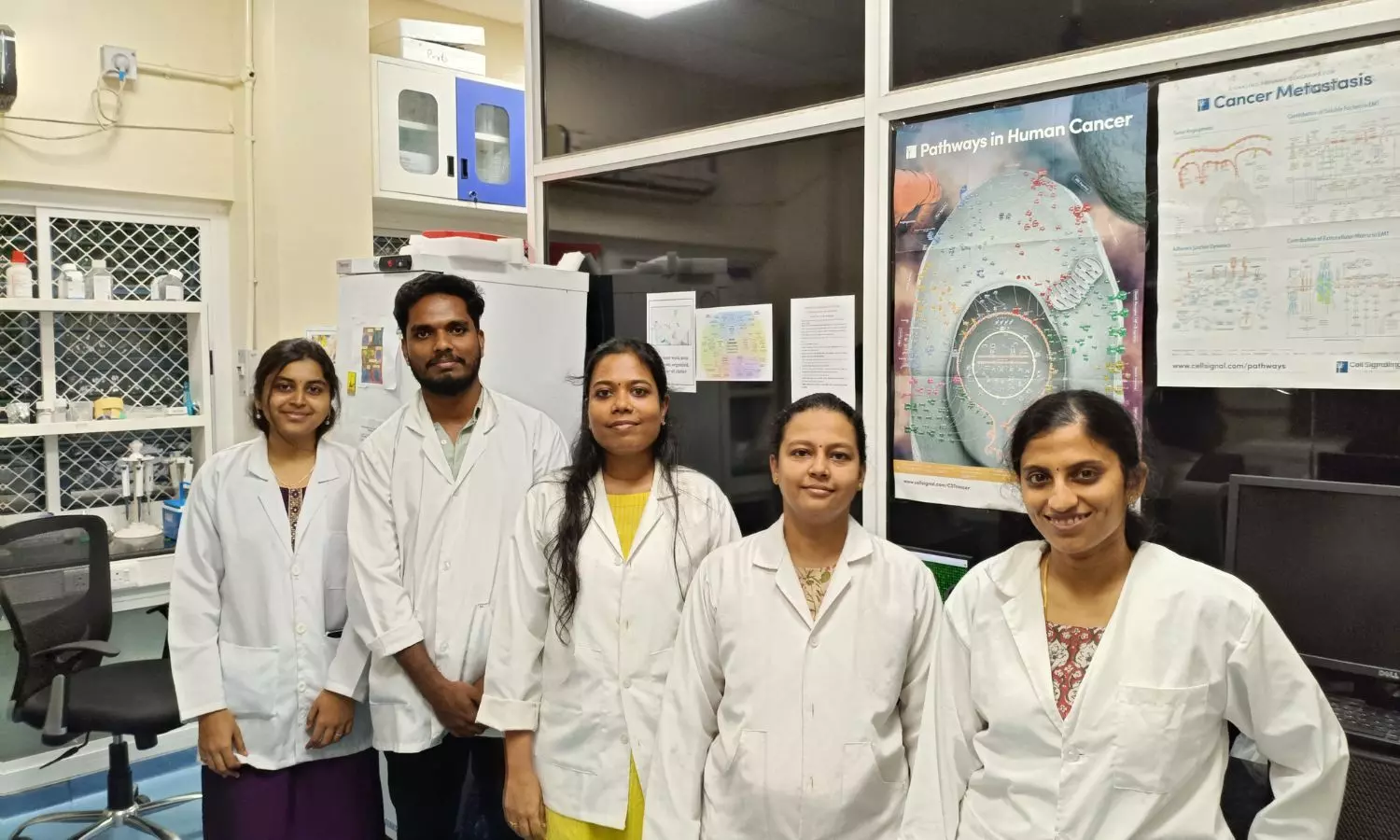
CHENNAI: Researchers from Indian Institute of Technology Madras (IIT Madras), Monash University and Deakin University, Australia, have developed a cutting-edge nanoinjection drug delivery platform that has the potential to make breast cancer treatment safer and more effective.
The approach creates a precise and sustained therapeutic system that minimises damage to healthy cells by combining nanoarchaeosome-based drug encapsulation with silicon nanotube (SiNT)-based intracellular delivery.
English and Tamil Bytes of Dr Swathi Sudhakar, Dept of Applied Mechanics and Biomedical Engineering, IIT Madras,
Breast cancer remains one of the leading causes of mortality among women worldwide. Conventional treatments such as chemotherapy and radiation often harm non-cancerous tissues due to systemic drug exposure.
To overcome these limitations, the researchers from India and Australia devised a nanoinjection system that delivers the anticancer drug doxorubicin directly into cancer cells using thermally stable nanoarchaeosomes (NAs) loaded into vertically aligned SiNTs etched onto a silicon wafer.
This integrated approach enhances the therapeutic efficacy of the drug while maintaining excellent biocompatibility.
Experimental results showed that the NAD-SiNTs (Nanoarchaeosome-Doxorubicin–Silicon Nanotubes) induced strong cytotoxicity against MCF-7 breast cancer cells, while sparing healthy fibroblasts.
The NAD-SiNTs triggered cell-cycle arrest and necrosis in cancer cells and significantly reduced angiogenesis, the process through which tumours develop new blood vessels, by downregulating key pro-angiogenic factors.
The platform demonstrated 23 times lower inhibitory concentration (IC50) than free doxorubicin, suggesting higher potency at much lower doses, which can directly translate into lower treatment costs and fewer side effects.
The highlight of this research is its combination of high precision, thermal stability, and long-term drug release (up to 700 hours) — a feat that addresses common drawbacks of existing nanocarrier systems, such as burst release and poor compatibility.
Unlike other nanoinjection platforms made from carbon or titanium nanotubes, the silicon nanotube-based design is inherently biocompatible and non-toxic, reducing the need for additional surface modifications. This makes it a more reliable and scalable candidate for future clinical translation.
The findings were published in Advanced Materials Interfaces (https://doi.org/10.1002/admi.202500323), a peer-reviewed journal publishing research on the design, development, and application of functional materials and surfaces for advanced technologies.
The research paper was co-authored by Kaviya Vijayalakshmi Babunagappan, Subastri Ariraman, Jann Harberts, Vimalraj Selvaraj, Mukilarasi Bedatham, Narendran Sekar, Nicolas H Voelcker, Roey Elnathan and Swathi Sudhakar
Highlighting the significance of this research, Dr Swathi Sudhakar, Assistant Professor and Faculty Advisor for Clinical Engineering, Department of Applied Mechanics and Biomedical Engineering, IIT Madras, said, “This research could have transformative implications for healthcare delivery in low- and middle-income countries like India, where access to advanced cancer therapies remains limited by cost.
By enabling targeted delivery of smaller doses with higher efficacy, the system can potentially lower the overall expense of cancer treatment and improve patients’ quality of life. The platform also aligns with national goals for affordable healthcare innovation and could eventually be adapted for use in treating other forms of cancer.”
The interdisciplinary team includes Dr Jann Harberts and Prof. Nicolas H. Voelcker from Monash University, Dr. Roey Elnathan from Deakin University, and collaborators from the Melbourne Centre for Nanofabrication. The research was supported by the IIT Madras–Deakin Joint Research Initiative, the Alexander von Humboldt Foundation, and the Australian Research Council (ARC).
Speaking about the next steps, Dr Roey Elnathan, Faculty of Health, School of Medicine, Deakin University, Australia, said, “This work lays the foundation for a modular drug delivery system. The next step is in vivo validation and evaluating how the platform performs across different cancer types”
Sharing the current status of this research and a possible timeline for real-world applications, Prof. Nicolas H Voelcker, Monash Institute of Pharmaceutical Sciences, Monash University, Australia, said, “We are expecting to see translation of this exciting and patented drug delivery technology over the next five years.
The proof-of-concept has been successfully demonstrated in in vitro (cell culture) and ex ovo (chick embryo) models, confirming its effectiveness and safety. The next phase of research will focus on in vivo validation, long-term toxicity studies, and regulatory assessments to prepare for preclinical and clinical translation.
This nanoinjection-based approach marks a major stride toward precision nanomedicine, potentially redefining how cancer drugs are delivered—making them smarter, safer, and accessible for all.

Deshbandhu Singh is the Senior Managing Editor at Medical Dialogues and Health Dialogues with about three decades of experience in both print and digital journalism. Previously, he has held editorial leadership roles at NDTV (Head of Digital Content Strategy and Senior Executive Editor), India Today Group Digital, Hindustan Times, Times Internet, and Sahara India. He is known for his expertise in digital content strategy, newsroom operations, and the launch of leading web and mobile platforms in Indian media.