

Rare Tumour Detected in the Frontal Lobe of the Brain
Brain tumours are rarely life-threatening. Usually, such tumours grow over a period of two to three weeks, and symptoms appear gradually thereafter. However, in rare instances, certain tumours can develop suddenly and become life-threatening within a short time.
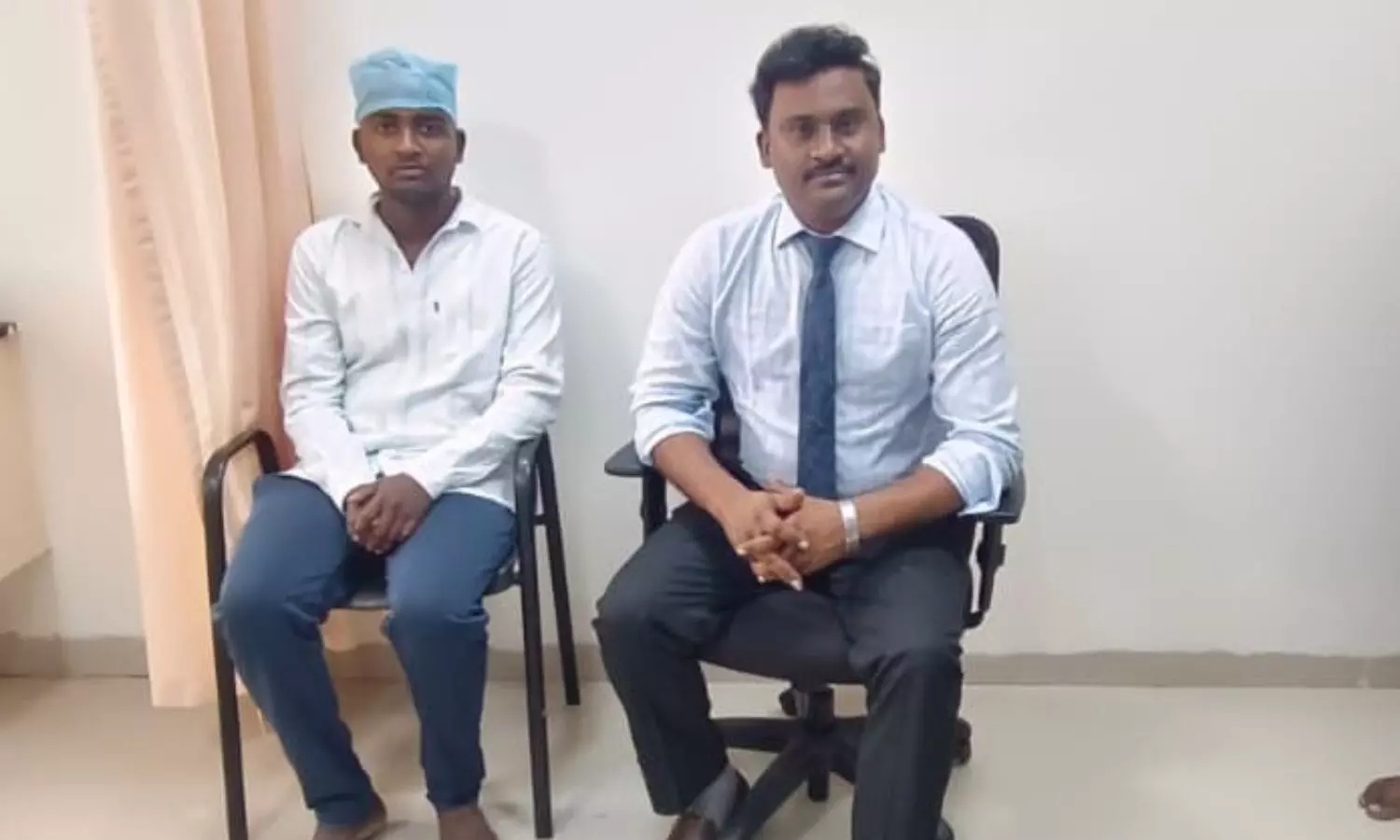
In one such uncommon case, doctors at KIMS Hospital, Kurnool, saved the life of a young man by performing an advanced endoscopic brain surgery. The details of the case were shared by Dr N. Sumanth Kumar, Consultant Neurosurgeon at KIMS Hospital.
A 24-year-old man named Balaram, a resident of Kurnool, was perfectly normal until the previous night and had even attended a family function with his relatives. Suddenly, about six hours before being brought to the hospital, he developed progressive symptoms including vomiting, seizures, severe headache, memory loss, and partial loss of consciousness. His family immediately rushed him to the Emergency Department of KIMS Hospital, Kurnool.
Upon evaluation, doctors performed investigations, including a CT scan of the brain, which revealed a tumour located in the anterior region of the third ventricle. Due to this tumour, the patient developed hydrocephalus, leading to obstruction of normal cerebrospinal fluid circulation and increased pressure within the brain.
Normally, the human brain contains four ventricles, which hold cerebrospinal fluid (CSF) that protects the brain and spinal cord. This fluid continuously flows through narrow connecting channels. Among the four ventricles, the third ventricle is very narrow. Unfortunately, in this young man, a tumour developed precisely at the junction of the frontal part of the brain and the third ventricle. As a result, CSF accumulated rapidly, causing acute hydrocephalus.
This sudden rise in intracranial pressure can lead to seizures, drowsiness, and, in severe cases, even death. Fortunately, the patient was brought to the hospital within a very short time after the onset of symptoms.
“We performed an emergency minimally invasive endoscopic surgery using the most advanced techniques, through a very small opening in the skull. Such complex procedures are usually performed only in major metropolitan cities. However, due to the availability of advanced infrastructure and experienced specialists at KIMS Hospital, we were able to successfully save the patient’s life here in Kurnool,” said Dr N. Sumanth Kumar.
The surgical team first created a small opening of about one inch in the skull. Through this opening, the brain layers were carefully accessed using an endoscope, and the surgeons reached the tumor site. The entire tumour was meticulously removed without causing damage to the surrounding brain tissue. Following removal, the normal flow of cerebrospinal fluid was restored.
The patient recovered rapidly after surgery, and due to his stable condition and good recovery, he was discharged on the third postoperative day, Dr. Sumanth Kumar added.
Dr Bhumika Maikhuri is a Consultant Orthodontist at Sanjeevan Hospital, Delhi. She is also working as a Correspondent and a Medical Writer at Medical Dialogues. She completed her BDS from Dr D Y patil dental college and MDS from Kalinga institute of dental sciences. Apart from dentistry, she has a strong research and scientific writing acumen. At Medical Dialogues, She focusses on medical news, dental news, dental FAQ and medical writing etc.