
WHO, Ayush Ministry Move to Integrate Traditional Medicine into Global Health Standards
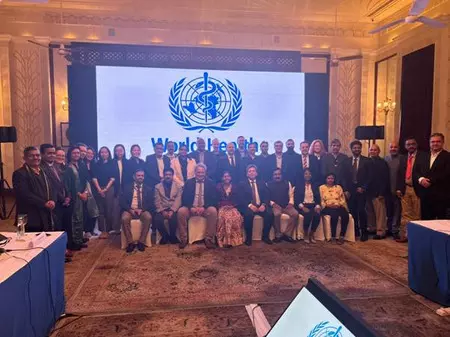
In a significant step toward mainstreaming traditional medicine globally, the World Health Organisation (WHO) and India’s Ministry of Ayush convened a two-day high-level technical meeting in New Delhi to develop global standards for traditional health interventions.
The meeting, held from December 20 to 21, focused on integrating traditional medicine into the International Classification of Health Interventions (ICHI)—a globally recognised system used to classify and standardise healthcare procedures.
This initiative follows the landmark Memorandum of Understanding (MoU) and Donor Agreement signed between the Ministry of Ayush and WHO in May, which laid the foundation for systematic collaboration in this area. Under the agreement, India is supporting both the financial and technical aspects required to develop a dedicated Traditional Medicine (TM) module within ICHI, with a focus on Ayurveda, Siddha, and Unani systems.
Health intervention coding plays a crucial role in global healthcare by creating a common language for medical procedures across countries and healthcare systems.
By incorporating traditional medicine into ICHI, healthcare providers worldwide will be able to better document, report, and evaluate the use, safety, and effectiveness of traditional therapies. This standardisation is expected to strengthen clinical research, improve policy planning, and enhance data-driven decision-making in healthcare.
The technical sessions were chaired by Kavita Garg, Joint Secretary, Ministry of Ayush, who is leading India’s efforts in developing national health intervention codes for Ayurveda, Siddha, and Unani medicine.
Experts and representatives from all six WHO regions—Africa, the Americas, Eastern Mediterranean, Europe, Southeast Asia, and the Western Pacific—participated in the discussions, ensuring a comprehensive and inclusive global perspective.
Several WHO member states, including India, Bhutan, Brazil, Iran, Malaysia, Nepal, Mauritius, South Africa, Sri Lanka, the Philippines, the United Kingdom, and the United States, shared updates on their national status and worked toward harmonising intervention descriptions for traditional medicine.
According to the Ministry, the project will be implemented by the WHO within defined timelines, following a rigorous scientific and evidence-based approach. Beyond supporting research and policymaking, the initiative is expected to enable the large-scale integration of traditional medicine into national health information systems worldwide.
This collaborative effort marks a major milestone in positioning traditional medicine as an evidence-informed, standardised component of global healthcare, expanding its reach while ensuring safety, consistency, and accountability.
With Inputs From IANS

Kanchan Chaurasiya joined Medical Dialogues in 2025 as a Media and Marketing Coordinator. She holds a Bachelor's degree in Arts from Delhi University and has completed certifications in digital marketing. With a strong interest in health news, content creation, hospital updates, and emerging trends, Kanchan manages social media, news coverage, and public relations activities. She coordinates media outreach, creates press releases, promotes healthcare professionals and institutions, and supports health awareness campaigns to ensure accurate, engaging, and timely communication for the medical community and the public.