

Union Health Ministry proposes to remove duplicate viral testing of blood products
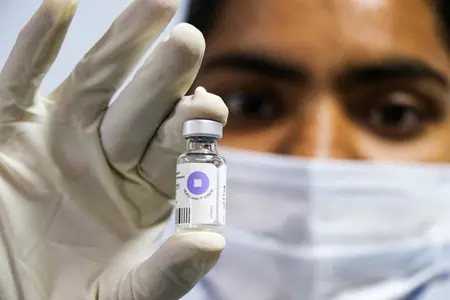
New Delhi: The government has released a draft Gazette notification proposing amendments to existing rules related to the testing of blood products, with the aim of eliminating duplicate viral testing and aligning the country’s regulatory framework with international standards.
The Ministry of Health and Family Welfare has invited stakeholders and the public to review the proposal and submit their comments and suggestions within the specified timeframe.
According to an official statement, the proposed amendment seeks to bring India’s testing requirements for blood products in line with globally accepted pharmacopeial standards. The objective is to rationalise testing procedures by removing additional requirements that are not considered necessary under international best practices.
At the same time, the ministry emphasised that patient safety will remain a top priority even as regulatory processes are streamlined.
The changes have been proposed under “Para G (Testing of Blood Products), Part XII C, Schedule F of the Drugs Rules, 1945.” The ministry described the initiative as an important step toward regulatory harmonisation and scientific rationalisation of testing protocols. It is also expected to reduce the compliance burden on manufacturers while maintaining strict safety standards for blood-derived medical products.
Under the harmonised standards outlined in the draft notification, the first homogeneous pool of human plasma intended for fractionation must undergo testing for several viral markers. These include Hepatitis B surface antigen, Hepatitis C virus RNA, and antibodies to HIV. Before the plasma can be used for fractionation, pooled plasma must test negative for these viruses to ensure its safety.
The draft further clarifies that only plasma pools that meet these safety requirements should be used in the manufacturing of plasma-derived medicinal products.
Currently, under the existing regulatory framework, final products made from already tested and qualified plasma pools are tested again for the same viral markers. The proposed amendment seeks to eliminate this duplication, which currently requires testing at both the pooled plasma stage and the finished product stage.
By removing redundant testing, the government aims to make the regulatory process more efficient without compromising on quality or safety. The ministry has encouraged industry stakeholders, experts and other interested parties to examine the draft notification carefully and provide their feedback.
Separately, the government has also been working on strengthening the country’s care economy. Recently, discussions were held on developing around 1.5 lakh multiskilled caregivers to address India’s growing domestic healthcare needs while also creating opportunities in the global care sector.
In line with this objective, the Union Budget 2026–27 has proposed measures to strengthen the care ecosystem by introducing NSQF-aligned training programmes. These programmes will focus on developing core caregiving skills along with allied competencies such as wellness support, yoga practices and the operation of medical and assistive devices, aiming to build a skilled workforce for the future. (With inputs from IANS)

Khushi Chittoria joined Medical Dialogues in 2025 as a Media and Editorial Intern. She holds a degree in Bachelor of Arts in Journalism and Mass Communication from IP University and has completed certifications in content writing. She has a strong interest in anchoring, content writing, and editing. At Medical Dialogues, Khushi works in the editorial department, web stories and anchoring.